

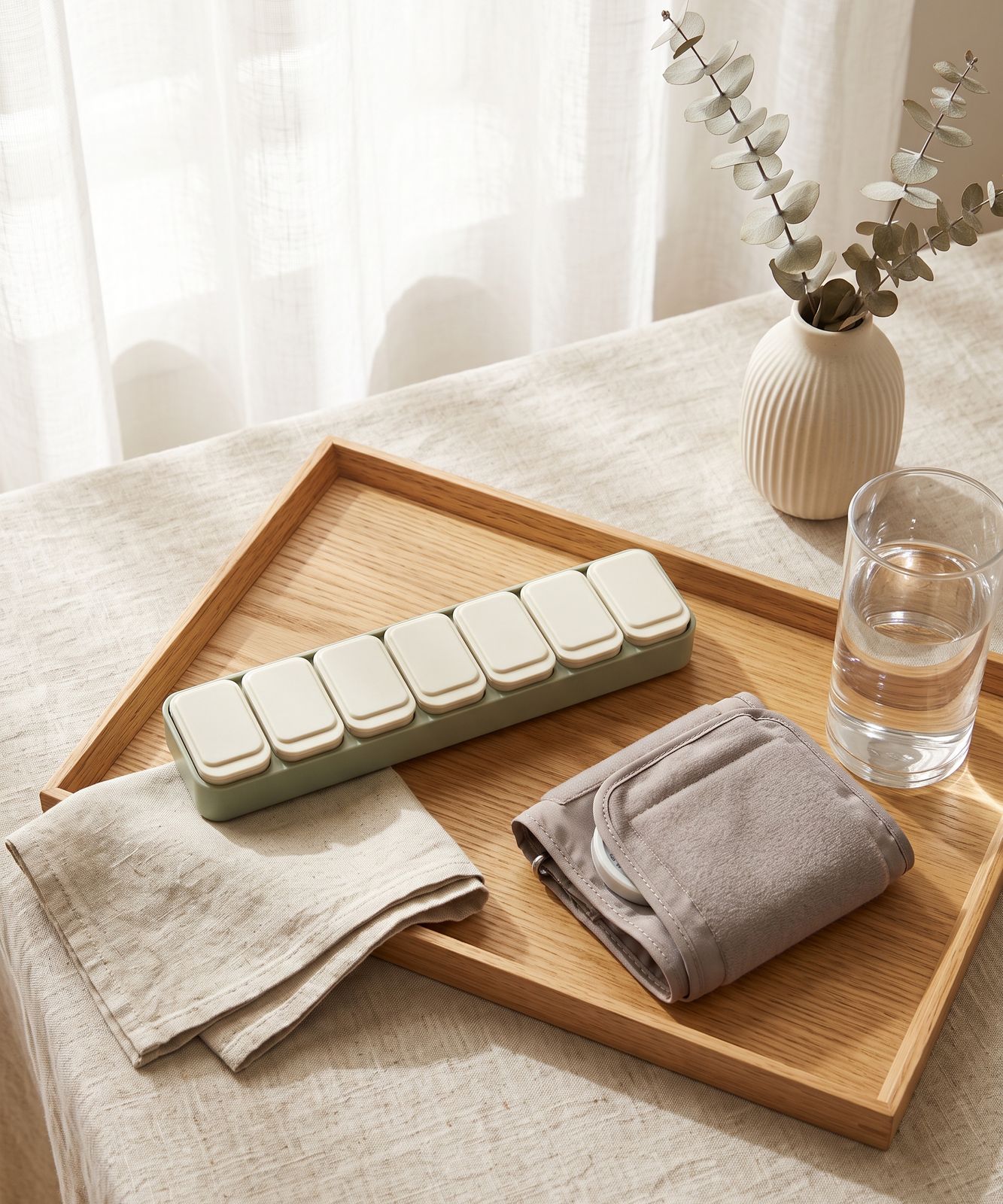
 The minimum, done precisely
The starting point
Medication and monitoring are the floor, not the ceiling.
Every group home says it manages medications. At Care Smith the person overseeing them is a doctoral-prepared nurse practitioner, and the medication cabinet is where her attention starts, not where it ends.
Doses on time, vitals tracked, appointments kept. That is the minimum a family should expect, and we treat it as the minimum. Health is what happens in the hours between appointments: what gets eaten, how far someone walks, how well they sleep, whether they have somewhere to be on Tuesday morning.
So the wellness plan covers those hours. It is written for each resident, it sits on the same page as the clinical plan, and the same nurse reads both.
Three rhythms
Move. Rest & nourish. Grow & belong.
The week is built around three rhythms. None of them is optional, and none of them is generic.


In practice
What wellness looks like on an ordinary Wednesday.
These are not program names. They are the habits of the house, and each one is written into the individual plan so it can be checked, not just hoped for.
- Real food, cooked hereNo institutional trays. A dietitian approves the menu; residents help plan it, shop for it and cook it in the shared kitchen. Someone who helped make dinner is more likely to eat it.
- Movement matched to the personOne resident may swim at the Y. Another walks the block twice a day. Another waters the tomatoes. All three count, all three are on the schedule, and none is skipped because the day got busy.
- Sleep and quiet time as clinical inputsPoor sleep changes behavior, appetite and how medication lands. We keep consistent routines, protect quiet time, and pay attention to the nights as closely as the days.
- Preventive care around lifePhysicals, dental cleanings, screenings and specialist visits are scheduled around the garden, the service and the volunteer shift, so health care supports a life instead of replacing one.
- Purpose on the planBelonging is written into the wellness plan with the same weight as blood pressure. A library card is a goal we track.
A clinician's eye
What a nurse practitioner notices at the dinner table.
Most health changes in adults with developmental disabilities do not announce themselves. They show up as a skipped breakfast, a new restlessness in the afternoon, a resident who laughed at the same joke last week and does not this week.
Dr. Levy is trained to read those signals. Appetite that drifts can be a side effect. A shift in mood can be pain that someone cannot describe. Sleep that breaks up can be a dose that needs adjusting. In a home run by a nurse, those observations become questions the same day, not notes saved for the next quarterly visit.
Because residents cook, walk and garden alongside the team, the team sees them in motion. That is where the early signs live, and it is why the person holding the clipboard is also the person at the table.
 The plan is written where the day happens
Next
See the home where this happens.
Walk through the kitchen, the lanai and the yard, then tell us about the person you are planning for. Dr. Levy reads and answers every inquiry herself, usually within one business day.